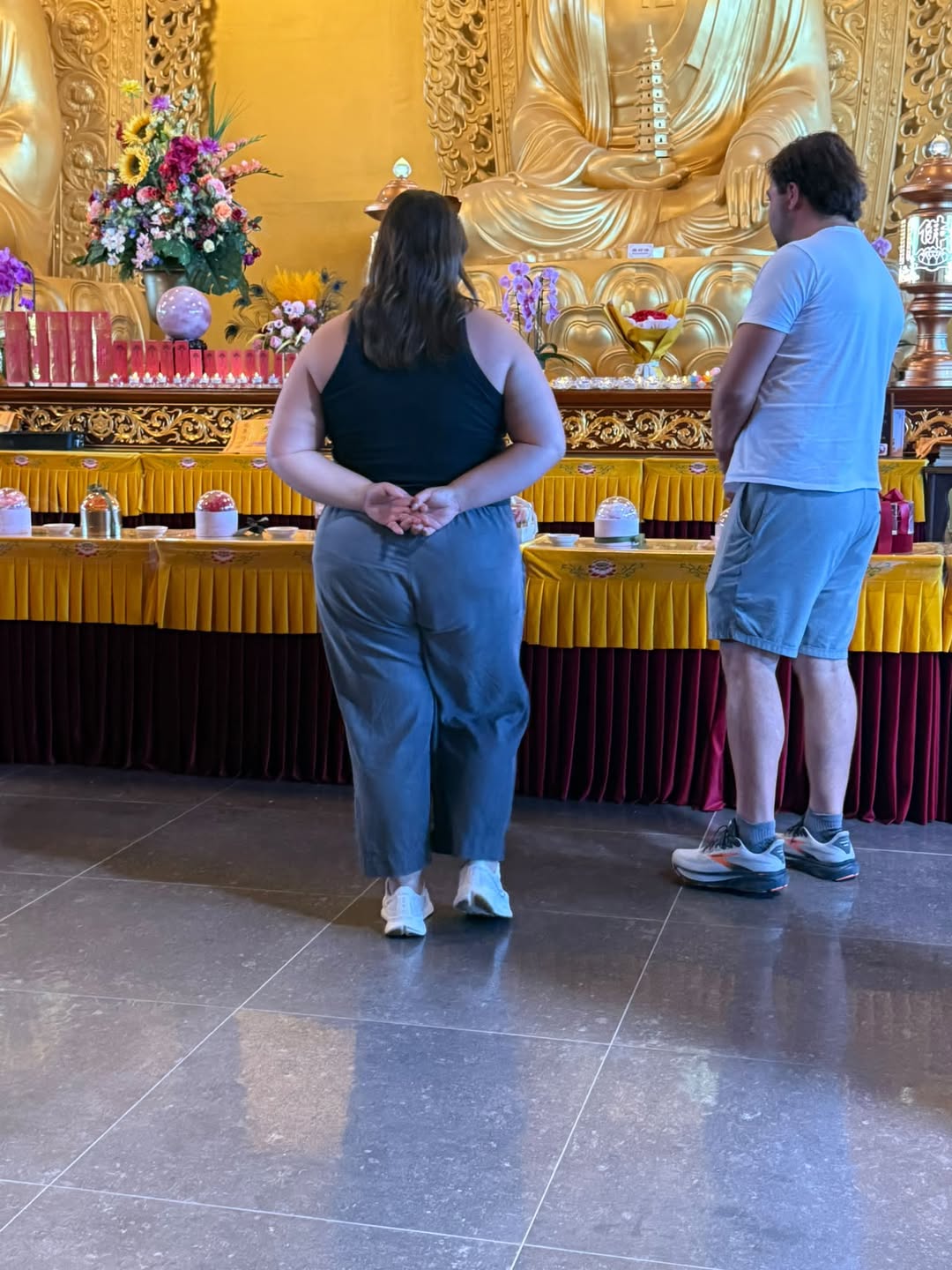
I remember when I first went to Vietnam and visited Buddhist temples for the first time. I knew very little about Buddhist etiquette, including how to dress, behave, or address monastics. There were temples where I wasn’t allowed to enter because I was wearing a sleeveless shirt and shorts. I remember one particular time when I borrowed my mother’s scarf, draped it over my shoulders, and pulled my shorts down so they were somewhat below my knees because I really wanted to enter and experience the peacefulness of the temple. At the time, I simply thought of it as a rule I had to follow. Today, as a Buddhist monk, I understand the deeper meaning behind it.
One of the things that has surprised me at Wutai Shan Buddhist Garden is how many people arrive without realizing that they are entering a Buddhist temple and monastery rather than simply a public park. I love that people want to come here, enjoy the grounds, walk, spend time with their families, and experience the peacefulness of the space. For many visitors, this may be their first encounter with a Buddhist temple, so they may simply not realize that there are customs associated with entering a sacred space.
In many Buddhist cultures, modest clothing is traditionally expected, which generally means covering the shoulders and wearing clothing that extends to at least the knees. This is an expression of modesty, respect, and mindfulness. Just as we might dress differently when entering a church, synagogue, mosque, or other place of worship, our clothing can be one simple way of acknowledging that we are entering a space dedicated to spiritual practice rather than ordinary recreation.
There is also a Buddhist reason for this. The Buddha taught extensively about sensual desire, and the monastic life is a training in becoming free from attachment, greed, hatred, and delusion. Modest dress can therefore be understood as a kindness toward the monastic community because it avoids unnecessarily drawing attention toward the body and sensuality. At the same time, if a monk experiences lust, the responsibility for that mind state belongs to the monk. A monk cannot blame someone else for his own defilements. The practice is to recognize the desire and let it go, while a visitor can also practice generosity by being mindful of the environment they are entering.
Temple etiquette extends beyond clothing as well. We generally speak quietly, silence our phones, remove our shoes where required, avoid touching sacred objects unnecessarily, and are mindful of how we sit and move around the Buddha, the altar, monastics, and other practitioners. None of these customs are meant to make Buddhism complicated or intimidating. They are simply opportunities to practice mindfulness and respect through our everyday actions.
A little modesty, a little mindfulness, and a little respect can transform the way we experience a Buddhist temple. We aren’t simply visiting a beautiful place; we are entering a space dedicated to awakening.